
- Home
-
IT consulting Custom software development Smart Development teams Staff augmentation Digital transformation SAP Services Game Development DevOps as a Service Cybersecurity & AI-Driven Data IntelligenceApplied & GEN AIAgentic AI Computer Vision Generative AI LLM Fine Tuning LLM Model Evaluation Model Context Protocol Development Natural Language Processing Retrieval Augmented GenerationInternet of Things (IoT)IoT Consulting & Strategy Industrial IoT (IIoT) Smart City & Smart Home Solutions IoT Device & Sensor Integration IoT Data AnalyticsCloud Computing & AI InfrastructureCloud Migration & Modernization AI/MLOps (Machine Learning Operations) Serverless Computing Data Warehouse & Data Lake Solutions Cloud Security & Compliance
-
Business SolutionsHuman Resource Management Software Parking Management System Time Management System Real Estate Management System Clockify Pro Time Management SystemSpecialized PlatformsCrypto Trading Platform QR Pay Betting exchange Home service management system Stock Management SystemIndustry ProductsJob Recruitment Platform Ads Network Digital Marketing Platform Parkmepro car-parking platform Video Streaming Portal Remittance Money Transfer SolutionProduct InnovationOnline Learning Management System QRPay Agent Baby and Pet Sitting Services Platform Telemarketing Voip Service Advanced Hyip Investment Software
- Insights
- Contact Us
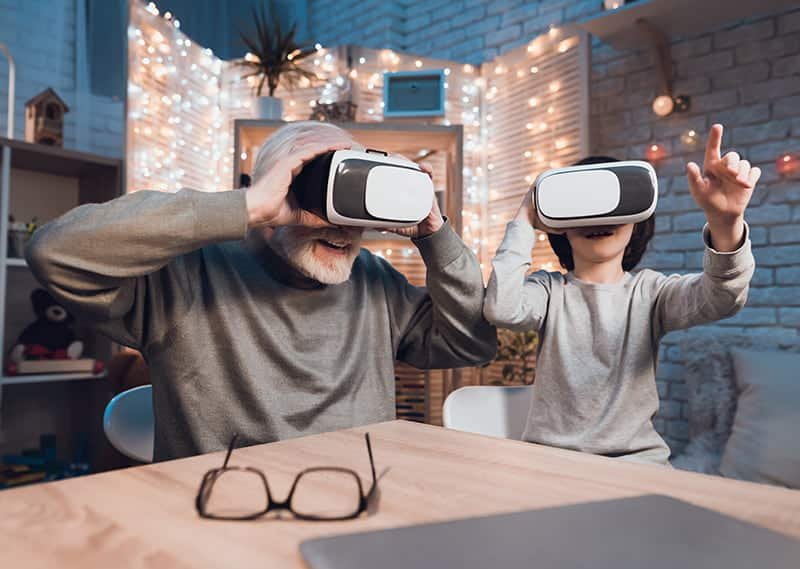
Comparative Effectiveness of VR AR Simulations vs. Traditional Instruction in High-Risk Vocational Training
Summary
The scalability and cost-effectiveness of immersive learning environments have emerged as significant factors influencing modern education and training practices. Immersive learning leverages advanced technologies, such as Virtual Reality (VR) and Augmented Reality (AR), to create engaging educational experiences adaptable across various institutional budgets and learning contexts. These environments provide unique opportunities for students and professionals to engage in hands-on learning, enabling them to acquire complex skills in safe, controlled settings—proven to enhance retention and the practical application of knowledge [1][2][3].
The notable scalability of immersive learning solutions allows institutions to replicate content across multiple locations and reach large audiences with minimal additional costs. Once an immersive module is developed, it can be easily deployed and modified, thereby reducing the need for extensive customization for diverse learner populations [4][2]. However, the integration of immersive technologies also presents challenges, including financial constraints and the need for adequate infrastructure and training for educators, which can hinder widespread adoption [5][6][7].
Cost-effectiveness is another critical aspect of immersive learning, with studies indicating potential training cost reductions of up to 70% compared to traditional methods [3][8]. By minimizing logistical challenges, organizations can focus on delivering quality educational experiences. However, the initial investment in hardware and software may pose barriers for some institutions, requiring a careful evaluation of long-term benefits versus upfront costs [9][10].
Overall, while immersive learning environments promise transformative advancements in educational efficacy, their success depends on addressing challenges and ensuring equitable access. This includes considerations for learners with disabilities and the necessity of ongoing support to foster an inclusive and effective learning ecosystem [11][12][7].
Types of Immersive Learning Environments
Immersive learning environments utilize digital technologies to create engaging educational experiences. These can be broadly categorized into three main types: Virtual Reality (VR), Augmented Reality (AR), and Training Simulations.
Virtual Reality (VR)
Virtual Reality provides a fully immersive experience, allowing learners to engage in computer-generated environments that replicate real-world scenarios. It fosters deep engagement as users interact with virtual elements, making it particularly effective for complex training tasks. For instance, medical students can practice surgeries in a risk-free setting, and engineering students can explore machinery without real-life hazards [1][13]. Additionally, VR facilitates social and collaborative learning through realistic avatars, connecting learners globally [14].
Augmented Reality (AR)
Augmented Reality overlays digital content onto the real world, enhancing learning experiences with interactive elements. It is highly accessible, usable on standard smart devices without specialized hardware. AR transforms traditional materials by adding dynamic visuals and multimedia support, improving engagement and retention [15][1]. It finds applications from education to retail, where it enhances user experiences by visualizing products in real-world settings [11].
Training Simulations
Training simulations replicate real-world tasks, enabling learners to practice safely in controlled environments using both VR and AR. This hands-on approach is vital in industries such as aviation and healthcare, where practical experience is essential [1][13]. Learners can make mistakes, assess outcomes, and refine their skills—improving preparedness for real-world roles.
Scalability in Immersive Learning
Immersive learning offers significant scalability advantages, enabling institutions and organizations to expand their reach without substantial costs. Once content is created, it can be replicated across various locations and audiences [2][16], making immersive learning ideal in the digital era where accessibility is key.
Evaluating Scalability
Scalability depends on device compatibility, content adaptability, and deployment ease. AI-driven simulations and AR applications on mobile devices present greater scalability than hardware-intensive VR systems [4][17]. High-end VR delivers deeper engagement but often increases costs and logistical complexity [4].
Benefits of Scalable Solutions
Scalable immersive learning accommodates diverse learner populations and styles, engaging multiple senses to enhance inclusivity and educational effectiveness [15][17]. Once developed, content can be easily replicated, enabling institutions to deliver quality education to a broader audience at minimal additional cost [2].
Accessibility Considerations
Accessibility must be central to scalability. Designs should accommodate disabilities and comply with standards like ADA and WCAG [11]. Additionally, offering shared-screen or offline options ensures inclusivity for learners lacking specialized hardware [12].
Challenges and Solutions
Despite its promise, immersive learning faces financial, infrastructural, and training barriers [5][6][18]. Institutions must plan carefully, train educators, and ensure adequate resources to realize the full benefits of these technologies.
Cost-Effectiveness in Immersive Learning
Immersive learning is highly cost-effective, often reducing training expenses by up to 70% compared to traditional methods [3][8]. Its scalability and reusability minimize logistical burdens while enhancing training outcomes.
Direct and Indirect Cost Savings
Workplace training costs are substantial. The National Safety Council reports that U.S. employers spend around $167 billion annually on work-related injuries [16]. Immersive platforms mitigate such costs by providing safe, risk-free training environments. Studies also show that VR-based training delivers results comparable to traditional learning while optimizing expenditure [10].
Scalability and Accessibility
Scalability enables on-demand training access and tailored modules, reducing instructor-led session costs [2]. Companies like Walmart effectively use scalable VR training, improving ROI through measurable engagement data [9].
Initial Investment and Long-Term Benefits
While VR hardware costs between $299–$499 [9], immersive learning yields long-term savings through enhanced performance and reduced errors. Instant feedback and active learning improve understanding and productivity [19].
Challenges Faced by Institutions
Financial Constraints
Institutions often face limited budgets, restricting access to immersive tools. A 13% decline in U.S. freshman enrollment has further strained budgets, forcing difficult technology investment decisions [7][20][5].
Logistical Issues
Infrastructure gaps—such as inadequate bandwidth or space—hinder implementation. Reliable technical support is essential for sustainability [21][9][5].
Faculty Training Needs
Educators require training to integrate immersive technologies effectively. Without it, adoption resistance and disengagement may arise [22][5][23].
Content Development and Management
Institutions must invest in high-quality content and shared standards to maximize effectiveness [24][17]. Poor integration can result in underutilized tools and low impact.
Collaboration and Trust
Strong collaboration between academia and industry ensures innovation and scalability. Open communication and shared goals are vital [24][25][12].
Case Studies
Walmart: Revolutionizing Employee Training
Partnering with Strivr, Walmart implemented VR training across 4,700 stores, cutting training time by 96% (from 8 hours to 15 minutes), increasing satisfaction by 30%, and improving assessment scores by 12.5% [26][27].
Emirates Airlines: Scaling Training for Cabin Crew
Through the MIRA XR platform, Emirates trained 23,000 crew members using simulations, reducing reliance on costly simulators and enhancing scalability [26][9].
Crédit Agricole: Enhancing Financial Training
The bank collaborated with HTC VIVE to train advisors using VR simulations, improving client communication and training consistency [26].
Intel: Streamlining Manufacturing Training
Intel used VIVE VR to train employees on manufacturing tasks, reducing training time by 94%, cutting travel costs, and improving accuracy [26][27].
Orewa College: Pioneering Architecture Education
In New Zealand, Orewa College used HTC Vive Pro and HP VR Backpacks for architectural design education, promoting collaboration and engagement [26][28].
Future Trends
Enhanced Learning Experiences
Immersive learning fosters creativity and curiosity, preparing learners for future challenges [29]. These technologies promote lifelong learning and paradigm shifts in education [30].
Increasing Adoption and Institutional Support
Instructor training and stakeholder support are vital for widespread adoption of AR and VR [9][18]. Institutional commitment ensures smoother transitions.
Research and Development
Ongoing studies demonstrate immersive learning’s positive effects on performance and engagement [5]. Future efforts must expand access and educator preparedness.
Continuous Improvement
Iterative testing and data-driven optimization will refine immersive learning design, ensuring continuous educational improvement [9].
[1] : Scaling Immersive Learning with Virtual Reality
[2] : Virtual Reality Training: Real-World Case Studies
[3] : Get latest insights on immersive learning trends – XR Guru
[4] : Immersive Learning – What it is, Benefits and How to Implement
[5] : Immersive Learning & Training – Rock Paper Reality
[6] : Unlocking the potential of scalable training & learning | Strivr Blog
[7] : The Business Case for Immersive Safety Training: ROI and Cost …
[8] : Scalable Immersive Learning Solutions Without VR Or Wearables
[9] : Top Strategies for Creating Immersive Educational Experiences
[10] : Immersive Learning Design Today: Best Practices – eLearning Industry
[11] : Immersive technologies as an innovative tool to increase academic …
[12] : What Are Immersive Training Solutions? A Complete Overview
[13] : The Promise of Immersive Learning: Augmented and Virtual …
[14] : Immersive Learning Platform & Training Solutions to Boost …
[15] : iLRN Spotlight: Recent Developments in Immersive Learning for …
[16] : Immersive Learning On A Budget: 7 Best Practical AR/VR Hacks
[17] : Turning Immersive Learning Implementation Challenges to …
[18] : Immersive learning for corporate training: The complete guide – ETU
[19] : Higher education’s top cost savings opportunities – EAB
[20] : Immersive Learning Environments: Designing XR into Higher …
[21] : [PDF] A Systematic Overview of Reviews of the Use of Immersive Virtual …
[22] : Immersive learning without immersing yourself in costs
[23] : What Research Says About Costing Technology-Enabled Learning
[24] : Making Learning Immersive Through Extended Reality – AACSB
[25] : Immersive Learning at Scale: Exploring the Feasibility of VR in …
[26] : Immersive Learning Case Studies: XR Training Success Stories
[27] : Immersive Learning ROI: The Cost Effectiveness of XR Training
[28] : Immersive Learning: How VR & MR are Revolutionizing Education
[29] : 12 Best Immersive Learning and Training Solutions
[30] : The Ultimate Guide to Immersive Learning for Education
The Ethics of Quantum Algorithmic Bias in High-Stakes Evaluation
The ethics of quantum algorithmic bias in high-stakes

Decentralized Quantum Access QaaS and Se cure Academic Collaboration
Decentralized Quantum Access (DQA) and Secure Academic

Systemic Educational Optimization via Quantum Simulation
Systemic Educational Optimization via Quantum Simulation